Day 6 — Kiso-Fukushima to Miyanokoshi
I think that’s the first time I’ve ever slept fully clothed—jumper, fleece, leggings, trousers, socks, even a bobble hat—indoors. My accommodation has adequate heating facilities, but they are the kind that would simultaneously heat and asphyxiate, and if it comes down to a choice of being warm and asphyxiated or cold and happily breathing then I always choose the latter. I slide out of bed with the aim of getting packed and out the front door as quickly as possible. I navigate the complex system of sliding doors to the bathroom to brush my teeth. On the way back through the veranda window I see something small and fluffy running away from the house, into the undergrowth and out of sight. I am still half asleep and my eyes are still a little blurry but if I’m not mistaken that is definitely a bear cub. At a push a fluffy dog. And that’s what happens when you don’t leave the radio on all night.
Grandma has a system of motion sensors dotted around the entrance way of her property and hooked up to cute electronic chimes so she knows when visitors come and go. She is therefore out the door to bid me farewell before I can sneak past. We exchange pleasantries and I tell her I just saw a bear. The look of shock on her face makes me think I should have kept my mouth shut. I try to undo the damage by suggesting that it was maybe a fluffy dog but she says there are definitely no dogs around here, fluffy or otherwise. She goes into full Grandma mode now, telling me to take great care of myself on the 200m lane back to National Route 19. She even offers to order me a taxi. I tell her that I will sing while I walk down, which should be enough to keep most living creatures at a safe distance. That seems to satisfy her and we say goodbye.
I see a black Mazda 6 coupé in a neighbour’s driveway with the engine running and no driver to be seen or heard anywhere.
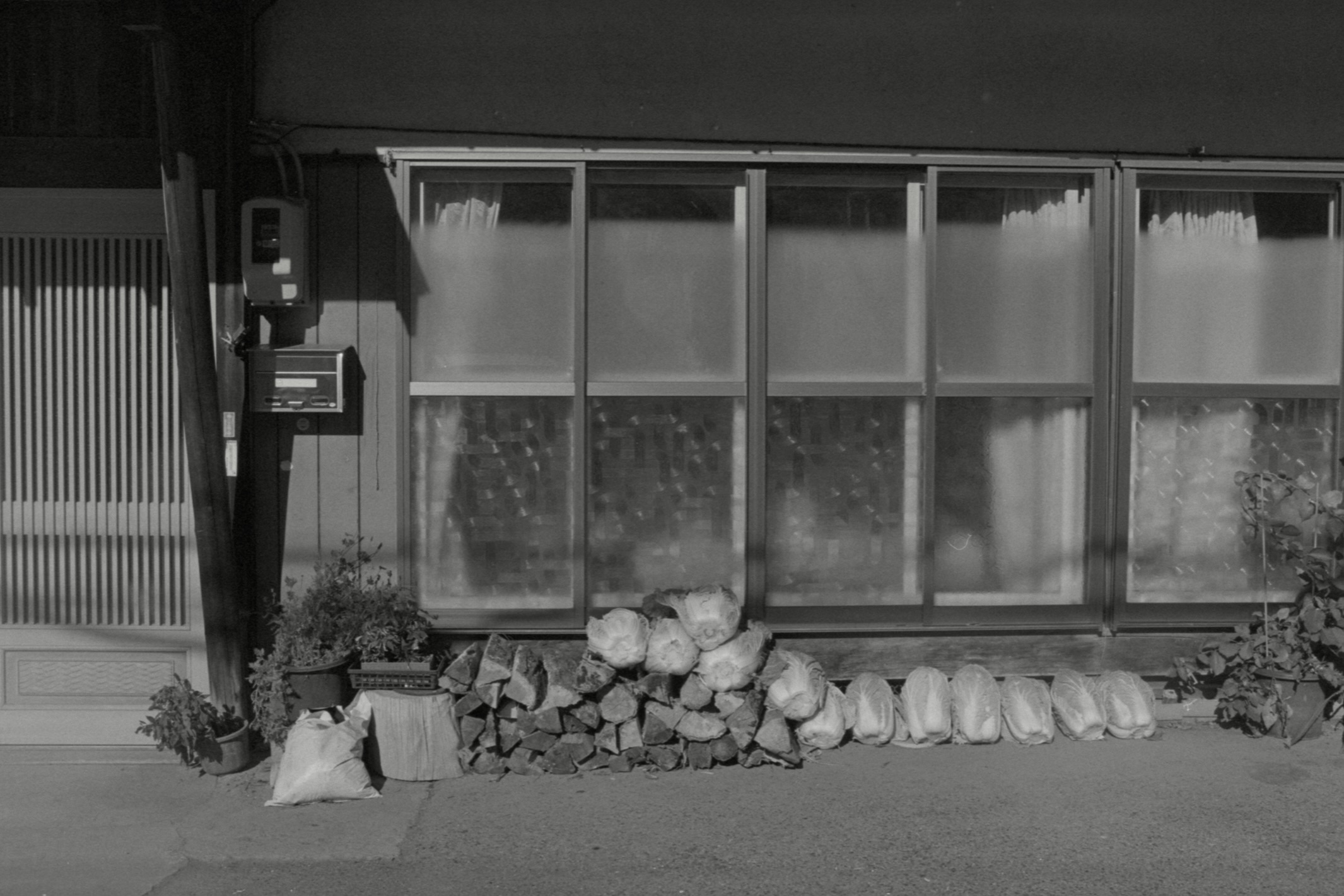
There is frost on the ground and ice in my bones so I head to the nearest café to warm up. When I get there there there is a piece of paper stuck to the shutters saying temporarily closed, sorry. I head to the next available café and it looks way less temporarily closed but I see movement inside and try the door. I’m in luck. Grandma #2 is there to greet me and offers me a seat by the electric fire that looks uncomfortably similar to the one I hadn’t dared to use last night. I ask for a tea and try my luck ordering my first pizza toast (it’s a thing here), even though it’s not on any of the five different menus dotted around the place. She says sure like it’s the cheapest and most profitable thing for her to make. A week ago it would have seemed weird to have something resembling pizza for breakfast but these days anything goes. The pizza toast—tomato, cheese, and pepperoni on thick-cut white bread—is good and I can see it becoming my regular breakfast. Grandma #2 turns on the TV and starts watching a nature programme. You and I both know I’m just waiting for the documentary to cut to a bird of any kind so I can use it as a segue to the foundation of all my conversations in Japan. The director obliges and I swoop down on Grandma #2 like a sparrow hawk on unsuspecting prey. She tells me her favourite bird is ha-to: the common pigeon. I tell her that that’s my cousin’s favourite bird too and she gives me a look as if to say: now there’s someone with their head screwed on right. Since there’s a bit of a nature theme going on I tell her I saw a bear this morning. She gestures: big or small? I say small, but she says where there are small bears there are large bears too and tells me to be careful and look after myself. I say goodbye before she gets the chance to offer to call me a taxi to the supermarket round the corner.
In the supermarket the items in my basket come to a total of 1,234 yen. I say “one two three four” out loud, pointing at the total, and the checkout lady beams with delight. As I pack my stuff I see her rush over to her colleague excitedly and say the words “one two three four” like it’s the first time it’s ever happened. By the time I make it back here this afternoon after my 10km walk out and train ride back I expect to see banners and lanterns and origami herons hung around town to commemorate this rare and portentous event.
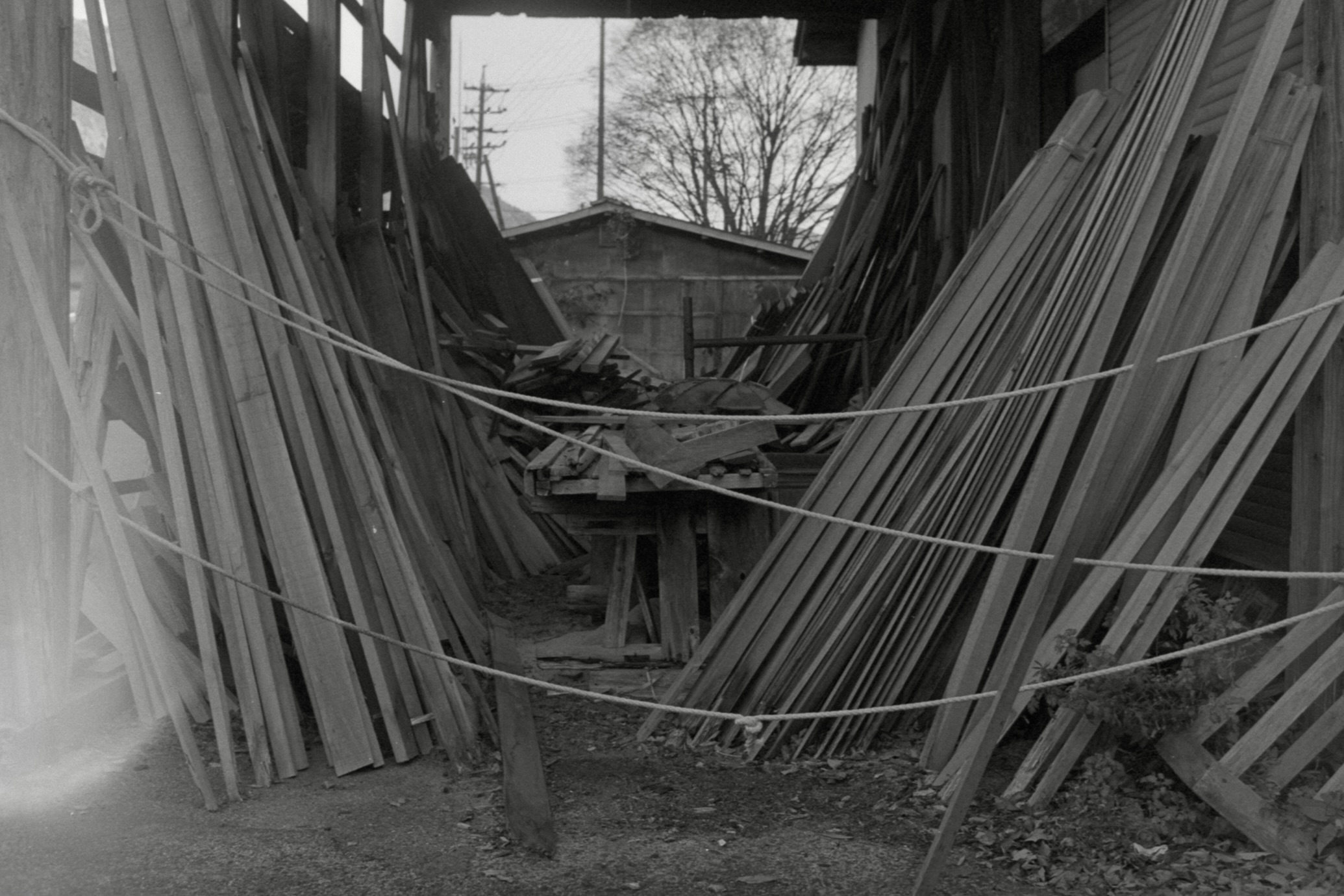
Kiso-Fukushima is the first place I’ve come to that feels like a recognisable town, with a commercial centre—shops, chemists, garages, supermarkets, laundromats, even a hospital—and residential areas spreading gently along and up the valley, eventually giving way to small-scale agriculture. My walk to Miyanokoshi is beautiful but uneventful. I follow minor roads most of the way, with a couple of small stretches on grassy tracks. In any case I barely come within sight of National Route 19—whom I am beginning to miss—the whole way. From a distance I see a junior baseball team training on a high-school baseball diamond. They are training picking up infield bunts and quickly dispatching the ball to second base, then to first. One boy picks up a bunt and throws it so far over the second baseman’s head that the whole team clasps their heads and guffaws in despair, and the errant thrower is force to run and fetch the ball with his head hung in shame.
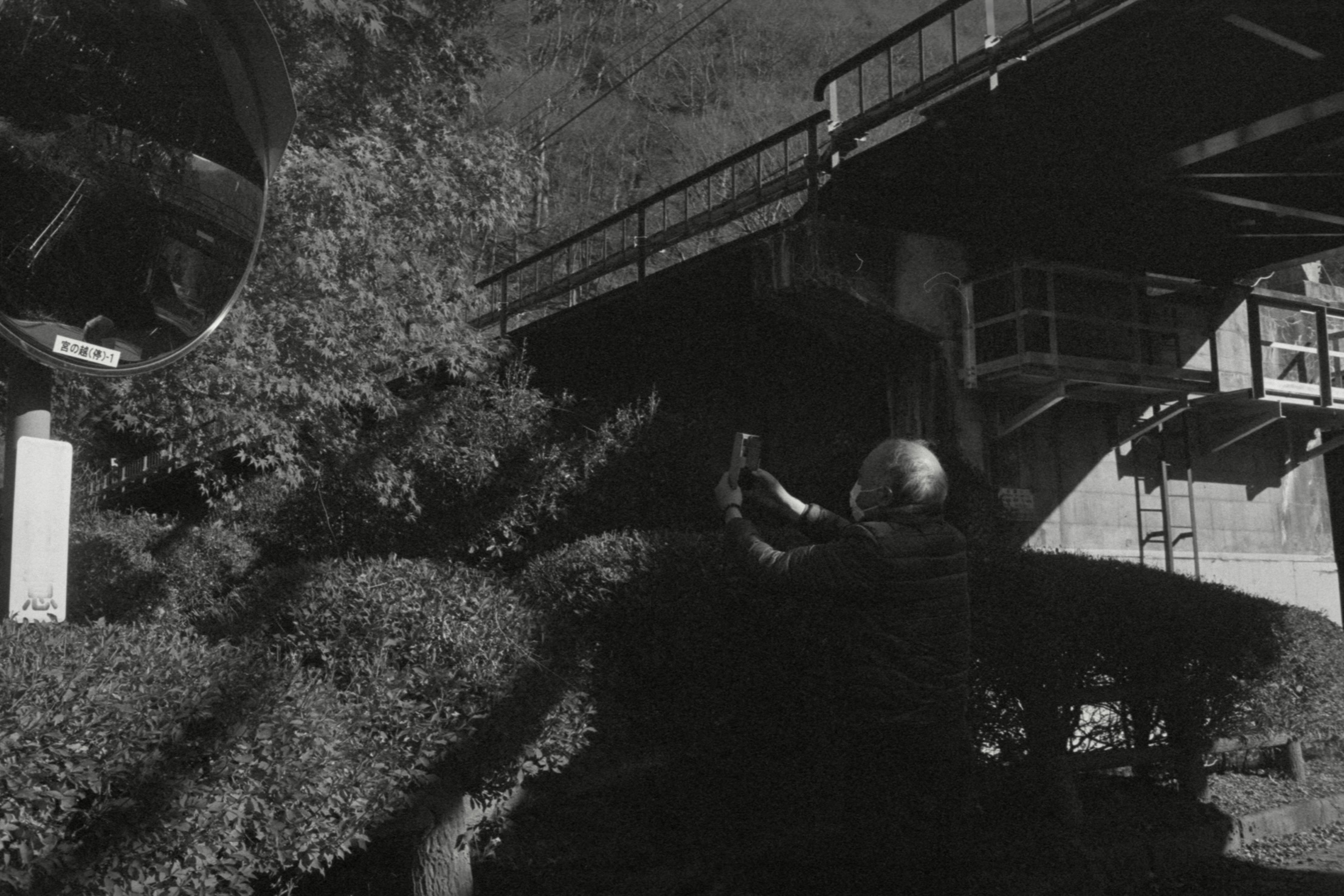
I pass a small army of cawing crows and caw back to signal allegiance.
The train that serves the Chuo line is a two-carriage train operated by one driver, and it is called a ワンマン, i.e. “wa-n-ma-n”, i.e. one man. There is a complex sequence of steps that all passengers, including tourists, are expected to memorise and follow. Without fail, all passengers must embark via the third door on the front carriage. If a passenger already has a ticket she is free to take a seat. If not, she must first collect a boarding ticket from the machine by the door before sitting down. When getting off, if the passenger has already paid then she must either disembark via any of the three doors of the front carriage if she has one type of ticket, of via the first door only if she has another type. If she has not paid, then she must present her boarding ticket to the driver, pay the required fare and exit via the first door. The ticket office in Myanokoshi is closed when I arrive so I dutifully pick up my boarding ticket on the train. As we pull into Kiso-Fukushima I head to the driver’s cabin. I’m expecting him to take my ticket and my fare but instead he barks something incomprehensible and gestures to get off his goddam train already. I oblige and head down to the ticket office expecting to find someone or something that will take my ticket and money. I look around and read every sign but there’s nothing and no one to take neither ticket nor money. I ask a passenger in the waiting room where I can pay and she jumps into action. She does the same loop around the station that I just did, checking every sign diligently, and eventually comes to the conclusion that I don’t have to pay, and tells me it’s my lucky day.
Lunch is at Ramen 55. I can smell the grease pouring out the ventilation duct in the side street before I even enter. The place is amazing—a family run affair with an L-shaped countertop behind which the three elderly cooks prepare meals and wash dishes with supreme efficiency, like they’ve been doing this for three hundred years. A fourth member of the crew is the maître-d‘, also pushing a hundred, who ushers and takes orders and writes receipts and takes payment with class and style and grace of a fast-talking 1920s jazz bar cocktail waitress. Maybe she was one, who knows. I order fried chicken with rice and miso soup and when it comes I wonder how on earth I’m going to get through it. The portions are huge. There are no tourists in here but me. I look around the room and absorb the scene and just as I’m thinking it’s the most authentically Japanese place I’ve found myself in yet the door swings open and a large gentleman pops his head in and asks whether there’s a table for eleven. The maître-d’ says of course without even looking up to check and so in walk all eleven members of the Toyo University sumo team. My jaw must have dropped because Lady M-d’ comes up to me, touches me on the shoulder and says sumo. I look back down at the mountain of food in front of me and realise that the team’s choice of restaurant is no accident.
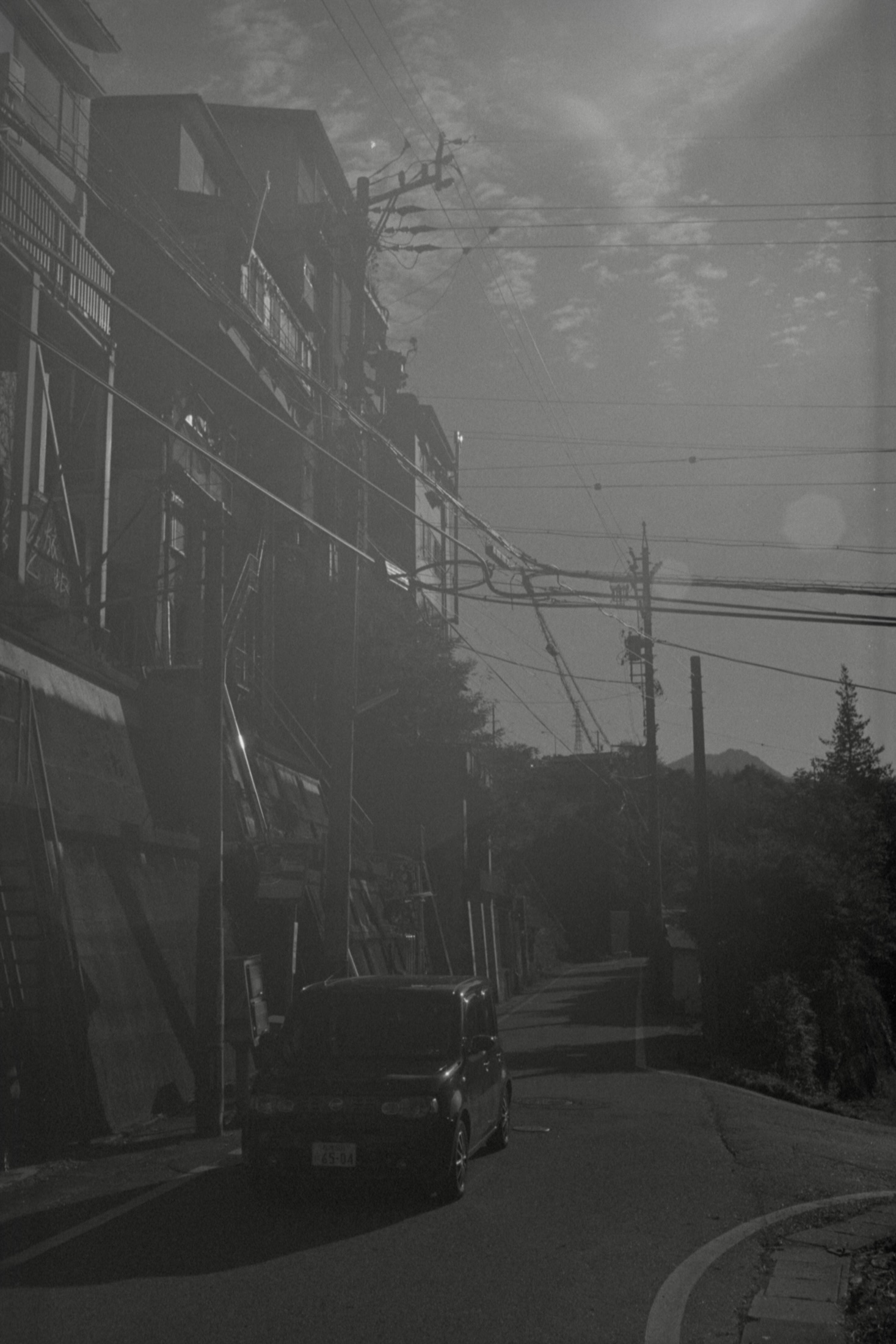
I stroll around town for a bit, enjoying the afternoon warmth. I find a nice scene to photograph—perfect light, a towering hillside building covered by a tangle of overhead cables—and as an old lady waddles into view from around a corner the scene is complete. As she moves out of shot she smiles and says hello. We enter into conversation of sorts and she seems to be making a point about the ugly building that I’m trying to take a photo of. I don’t understand a word she’s saying so I pull out my phone and ask her to speak into it. Apparently Grandma #3 is telling me: Be careful when you go, be careful over there. Please be careful and thank you.