Day 5 — Agematsu to Kiso-Fukushima
Today is Shichi-Go-San—literally Seven-Five-Three—a day of national celebration for children of those ages. I question the significance of those ages until I learn that the festival dates back 700 years to a time when high infant mortality was a thing and reaching those ages was a significant milestone.
Breakfast is almost identical to yesterday’s and I am in total control of the situation. There is an extra bottle of sauce today labeled フレンチ, i.e. fu-re-n-chi, i.e. “French”. I stick with the Japanese sauce. I have now existed in this hotel’s lobby and dining areas long enough to recognise the piped-in jazz muzak and what melody is coming up next, which means it’s time to leave.
The designers of this hotel seemingly only considered pedestrian access as an afterthought judging by the alpine-steep footpath, the only way in or out, that’s just a potentially bankrupting lawsuit waiting to happen. As I descend it gingerly I consider the nature of serendipity, how blessed I’ve been so far on this trip, and how it’s impossible to force interesting things to happen—they either will or they won’t and you have to be equally open to both outcomes.
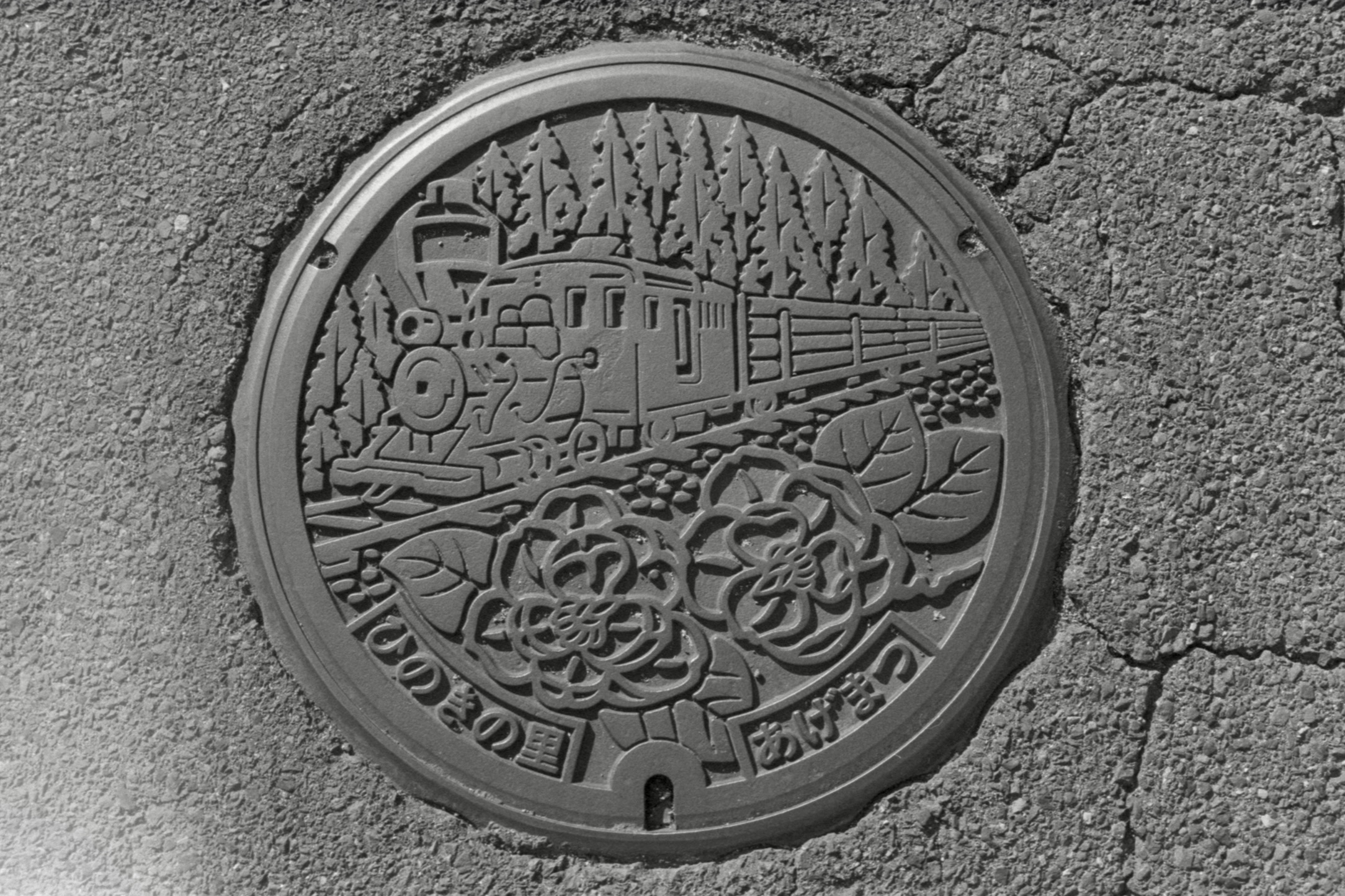
I start my 30-minute walk towards the centre of Agematsu with a tentative plan of stopping in town to do some painting and grabbing lunch before heading on to my next stop a short 10km up the road. On an overpass someone has graffitied the name Snoopy. This is the first graffiti I have seen in Japan and it’s about three inches long.
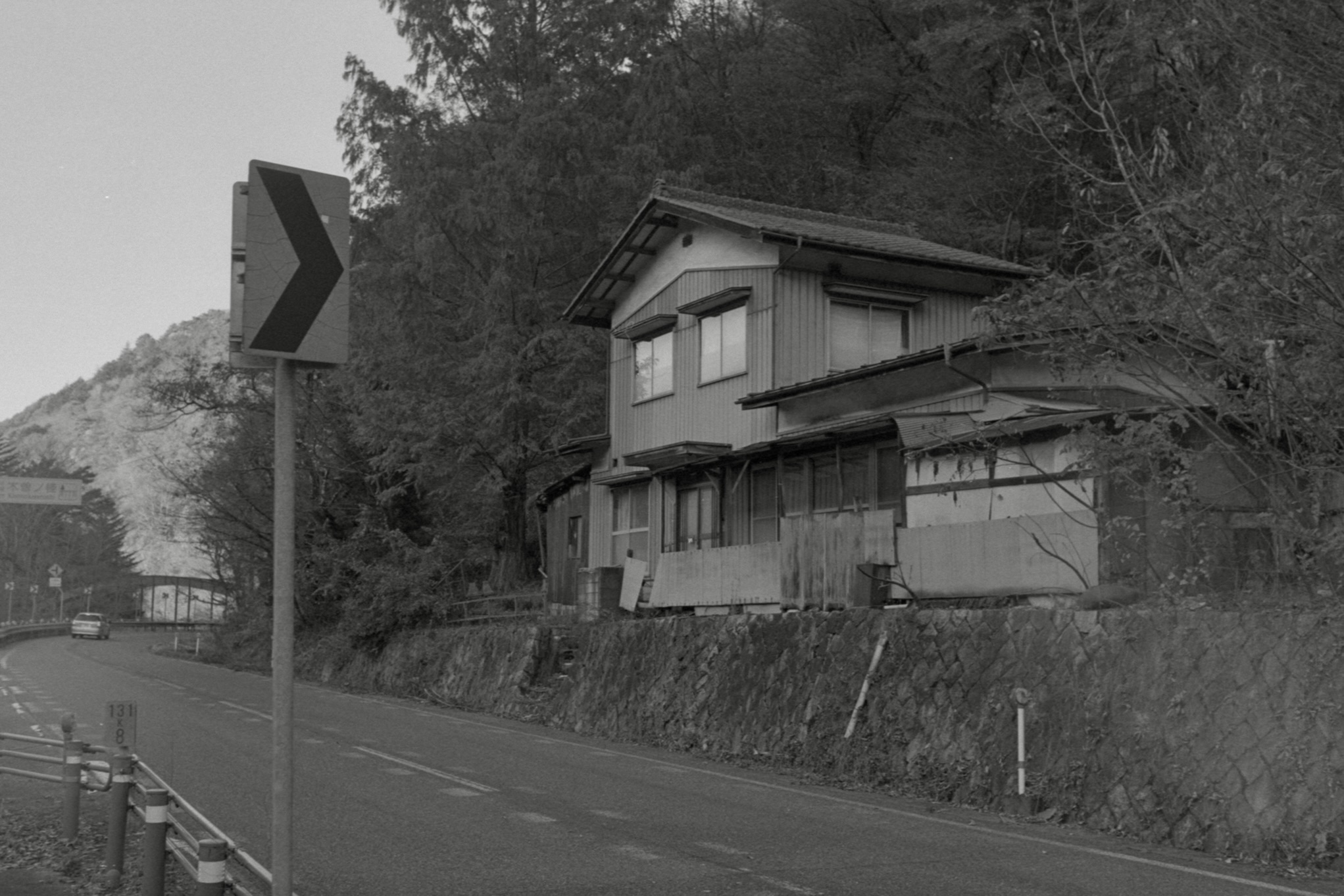
I approach a defunct café. It looked cool enough to photograph as I walked past it yesterday, and—bathed in sunlight with an invitingly chair-shaped rock at a perfect distance and angle away—makes an interesting subject to paint today. The building is an architectural marvel. If it was built today it would still look vaguely futuristic. Well proportioned, charming details, interesting contrast of textures and tones, poised dramatically at the edge of a ledge. The coffee must have been pretty bad.
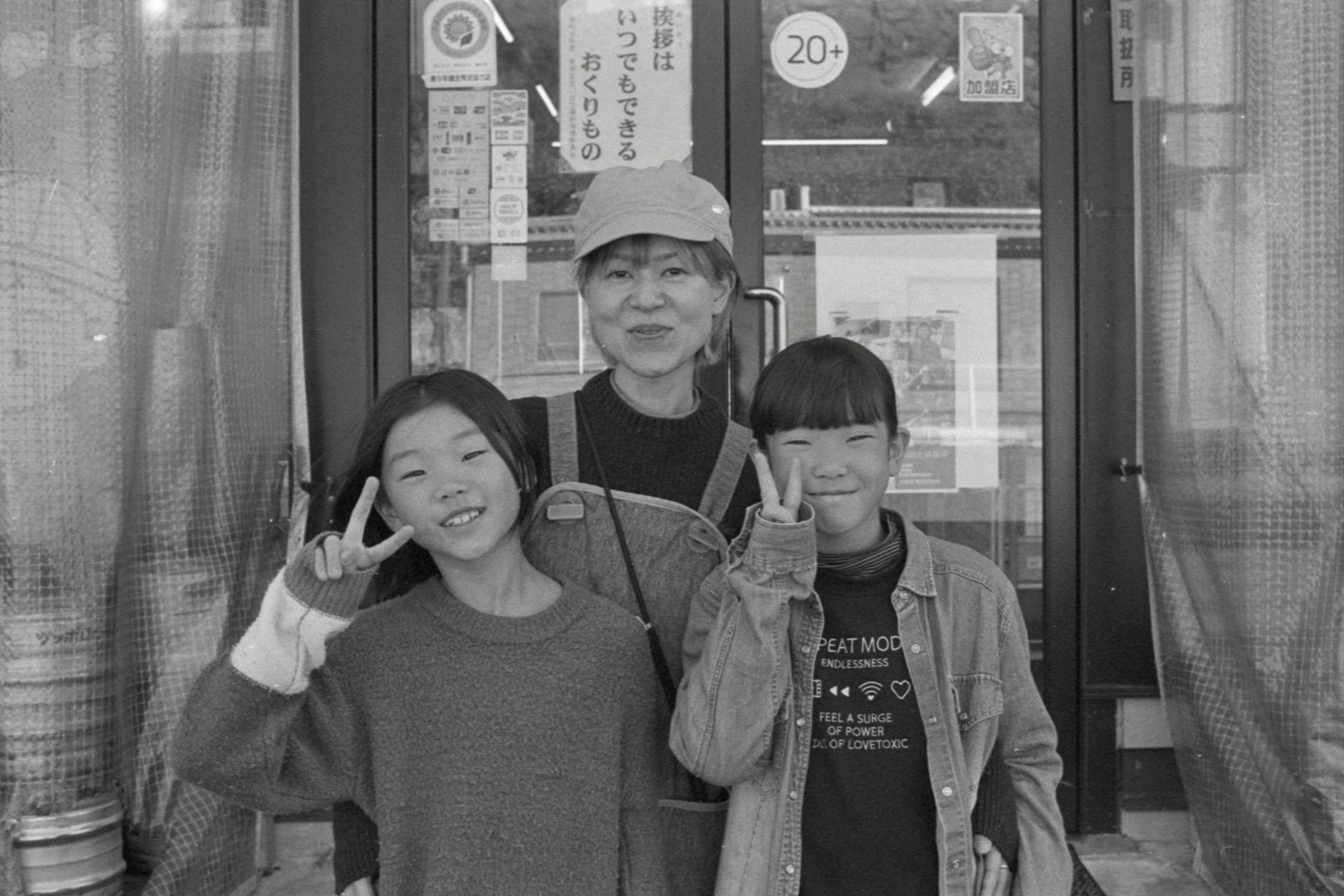
I’m half way through my painting and a toddler appears from nowhere, his older sister in hot pursuit. The girl waves and says “hello” (again a little presumptuously, I think) and I say hello back. The toddler says “bye-bye” and runs off in the direction of the main road. His sister again runs after him. I carry on painting as they run back and forth across the forecourt. At one point the girl comes up to me and asks me where I’m from. I say I’m from England. She then asks something else I don’t understand but because she’s under 60 and knows what the internet is she pulls out her phone and starts typing to get a translation. “What are you doing?” I say I’m painting and show her my half-finished masterpiece. She takes a look and says it’s good. I ask her whether she paints and she says yes but she’s not very good. I tell her she just needs to practise more. She asks my name and I give her the Japanese version: リッチ, or “Rii-chi”. I ask her hers and she says Chise. She says her sister is a very good painter and asks whether I would like to see one of her paintings. I say sure. Chise explains that the building next to the café is a shop that belongs to her family, and she rushes inside to fetch the painting, while I get back to mine. She comes back with a painting of a silhouette of treetops against a dark blue background and a bright white moon sitting in the upper-right corner. It’s actually pretty good. Perhaps half out of kindness and half out of concerned curiosity the girl’s mother walks out of the shop too and heads in my direction carrying a tray holding a cup of tea and some mysterious treats. She offers them to me and places them on my rock-cum-sofa. I offer her all the gratitude I can muster, and then some. She asks where I’m from and when I say England she asks whether I like whiskey or beer. I say “sometimes” and ask what she sells in her shop. She says alcohol, and suddenly her question makes way more sense. Now grandma appears on the scene and says hello and asks to see my painting-that-will-never-be-finished-at-this-rate. She probably wonders why I’m painting the abandoned café when there’s a perfectly good and profitable liquor store I could be painting right next door. Mum and grandma say goodbye and get back to tending their store. I manage to squeeze another twelve seconds of painting in before Chise’s sister comes out. The two look identical and I ask whether they’re twins. Chise says “no” with her voice and “don’t be stupid” with her eyes. She tells me that her sister is two years younger and is called Saya. I tell Saya I like her painting and she says thank you. They both go inside and leave me to carry on painting. I try the tea and it is refreshing, but the treats that look like biscuits are actually savoury, which is weird. I am almost finished with my painting when the sisters come rushing out with sheets of A3 paper and some pens and ask whether they can draw with me. I am in no rush today so I say sure. Chise starts drawing a cartoon girl, while Saya draws the beautiful Japanese yew tree (Taxus cuspidata) guarding the forecourt entrance. I start a quick painting of the tree too for fun. I barely have time to consider how ridiculous this whole scene must look when I hear a rustle from the bamboo saplings above the embankment on the other side of the road. Chise turns around to look and gasps. I wonder what is going on and she starts typing frantically. She tells me there is a monkey in the bamboo trees and I figure something must be lost in translation. I get up to see for myself and there are indeed two monkeys descending the embankment and casually crossing the road. It would be difficult to judge who is the more excited out of the three of us at this moment. While I stare at the monkeys like a moron Chise is typing frantically again. She shows me the translation that says: “If you make eye contact with the monkeys they will attack you”. I turn away from the monkeys sheepishly and get back to my painting. Grandma comes out with another cup of tea, which I happily accept, and asks if I’m hungry. It could just be an idle question, but in any case I politely say no. I eventually finish my painting and tell them I have to leave. Chise asks where I’m going and I say into Agematsu to get some food. She tells me that one of the oldest soba (buckwheat flour noodles) restaurants in Japan is five minutes back in the direction I came from so why don’t I go there instead. I ask whether the food is delicious and she says yes, emphatically. I’m tempted to ask which member of her family owns the restaurant but hold back and thank her for her thoughtful recommendation. Chise goes running inside and I start packing up my stuff. She comes back with a simple small wooden picture holder and says it’s a gift from her family. I don’t know how to respond to such undue kindness besides saying thank you and smiling. I mentally scan the contents of my rucksack to think of something I could offer as a gift in return, and the best I come up with is two pens that I use about once per year (and that I will inevitably replace when I reach stationery nirvana in Tokyo). I give them to Chise and Saya with instructions to use them as much as they can. They say thank you and bow in an earnest and sincere way that is truly endearing and humbling. Before leaving I decide to pop into the shop to thank the family for everything, tell them how lovely they are and to wish them a nice day. On the way in Chise presents me with a ham and egg sandwich made of the thickest-cut white bread I have ever seen wrapped in cling film and says it’s for my dinner. I go inside and say my farewells and they ask to have their photo taken with me. How could I say no.
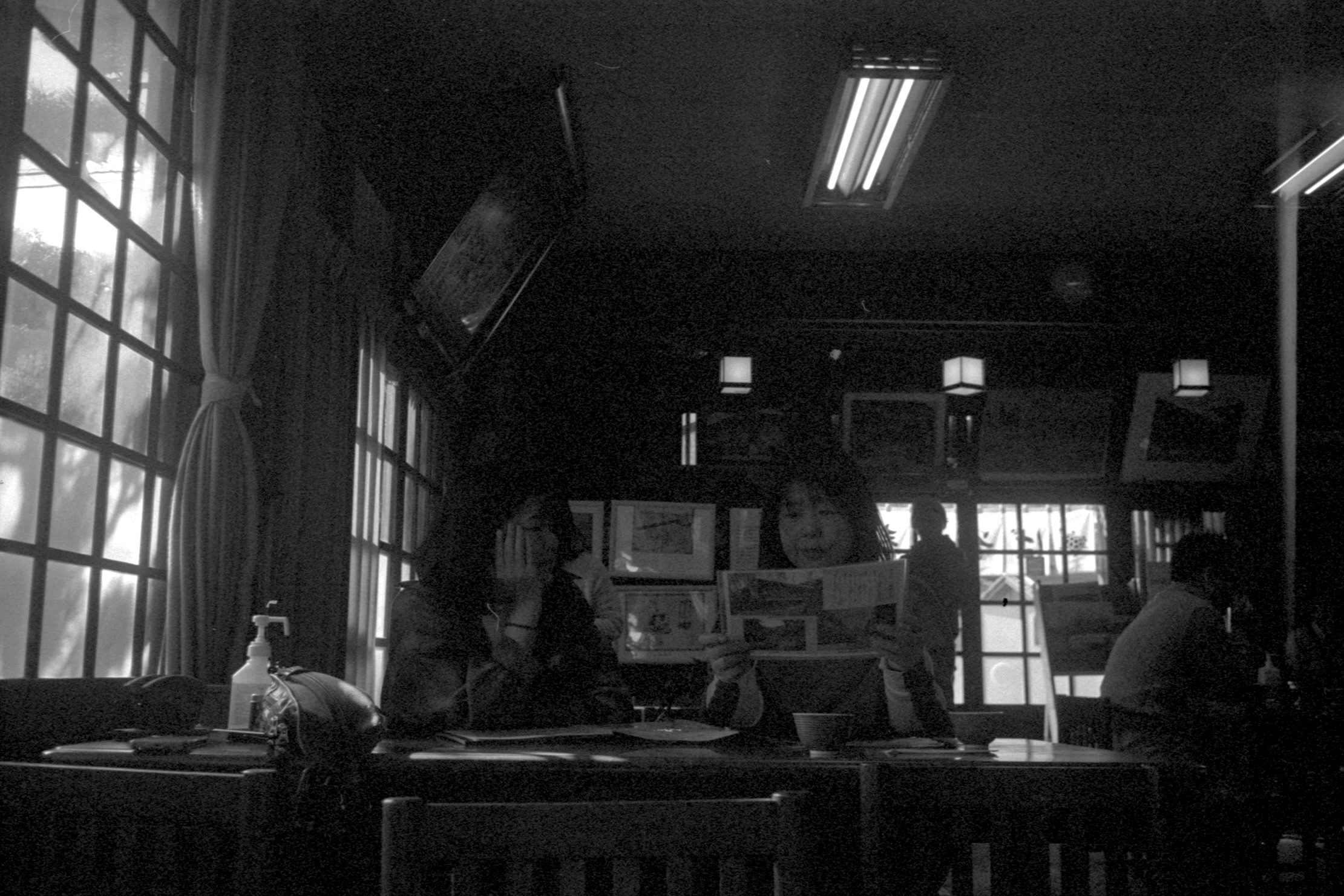
I walk to the soba restaurant and head inside. It’s packed, save for one table in the corner that has just that second been vacated, and at which the hostess invites me to sit. She places the bowl of noodles in front of me and my life is suddenly captured in freeze frame—the sunshine pouring through the window onto my food from which steam spirals upwards and vanishes as fellow diners arranged harmoniously around the room talk in hushed tones. I acknowledge the intense beauty of the moment and tuck in.
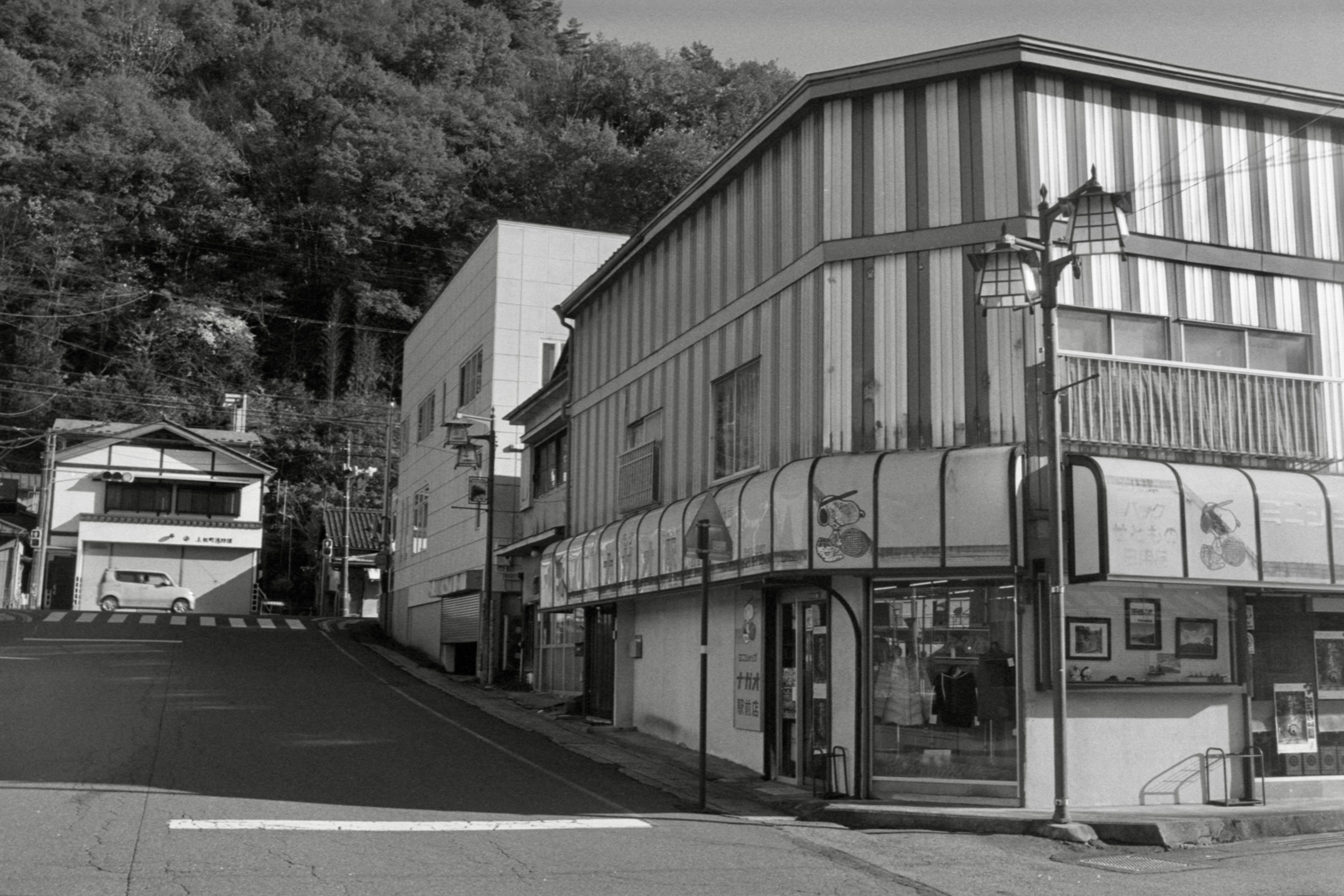
I walk into Agematsu with the vague expectation of bumping into my anglophile drummer friend but he is nowhere to be seen. I walk past the house where the old lady was struggling to hang a pair of trousers yesterday and the trousers are no longer hanging there. A wave of relief washes over me. I walk past a man loading his car with miscellaneous items. Needless to say the engine is running while he does this.
The walk to Kiso-Fukushima is otherworldly. Every step is a Hallmark-brand glossy picture postcard of autumn in Japan. The topography and my direction of travel are such that I think the sun has set behind the westerly mountains at least five times before it finally does. I spend no more than three minutes on National Route 19 the whole way.
I’m welcomed at my guesthouse for the night by an old lady who pronounces the English words she does know very well, but struggles with anything that falls outside her narrow range of vocabulary and set phrases. She is essentially the Japanese equivalent of me with the languages reversed. She shows me round what I at first assume is a reproduction of an authentic 1960s Japanese house as part of a museum tour, until I realise this is my accommodation. (It could be both things I guess.) At the end of the tour she hands me an analogue radio. I ask whether she can recommend a good jazz station and she totally dodges my question and says that if I hear a bear I should turn the radio on to scare it off. I ask her what a bear sounds like and she says she doesn’t know because she’s never heard or seen one. I will sleep with the radio on tonight just to be safe.