Day 3 — Nagiso to Nojiri
Today I am bombarded with novel cultural experiences without even trying. It starts with an early-morning onsen, which I quickly learn is no different to a late-evening onsen or mid-afternoon onsen. From there I head to the breakfast room, where I am greeted outside by a butler from a Japanese horror movie—bone-white skin, bulbous sagging eyes, ill-fitting suit, impeccably polite—who ushers me inside where I see a low table with my room number on it, breakfast served and ready. An elderly Japanese couple is already slurping away at another table. I feel like my actions are being scrutinised from all angles. I scan for hidden cameras. I’m pretty sure I hear the butler snigger menacingly behind my back. There is nothing like being thrown in at the cultural deep end at 7am, and in this sink-or-swim situation my brain stops overthinking and I just sit down on my knees, for two seconds, then sit cross-legged. Just as I think I’m in the clear of potential faux pas I realise I have no idea how I’m supposed to eat the food in front of me, or more precisely in which order, or in which combination. There are tiny dishes of: pickled courgette; pickled mushroom; more unidentified pickled vegetables; seaweed; and smoked salmon. There is also a mini tea-light stove on top of which a small skillet sits, inside which an egg is slowly frying. Finally there is a bowl of rice with a graphic and very serious instruction card on it warning me not to put anything (e.g. soy sauce or an egg) into—and I quote—“the bowl containing rice.” Now, does that mean the bowl the rice is currently sitting in, or the auxiliary bowl I’m supposed to serve portions of rice into? This puzzles me. Meanwhile the egg is fast approaching cooked and I have no idea how I’m supposed to get it out of the blister-hot (don’t ask) skillet and into something I can eat it from. I feel like I’m in The Crystal Maze and I’m half expecting the butler to pull a harmonica from his pocket at any moment. Finally logic prevails and I figure out that the onerous instructions must be referring to the master rice bowl, because otherwise they are effectively forcing me to eat plain white rice for breakfast. I somehow manage to quickly scrape and flip the fried egg into my personal rice bowl with a fork while no one is looking. The food is delicious.
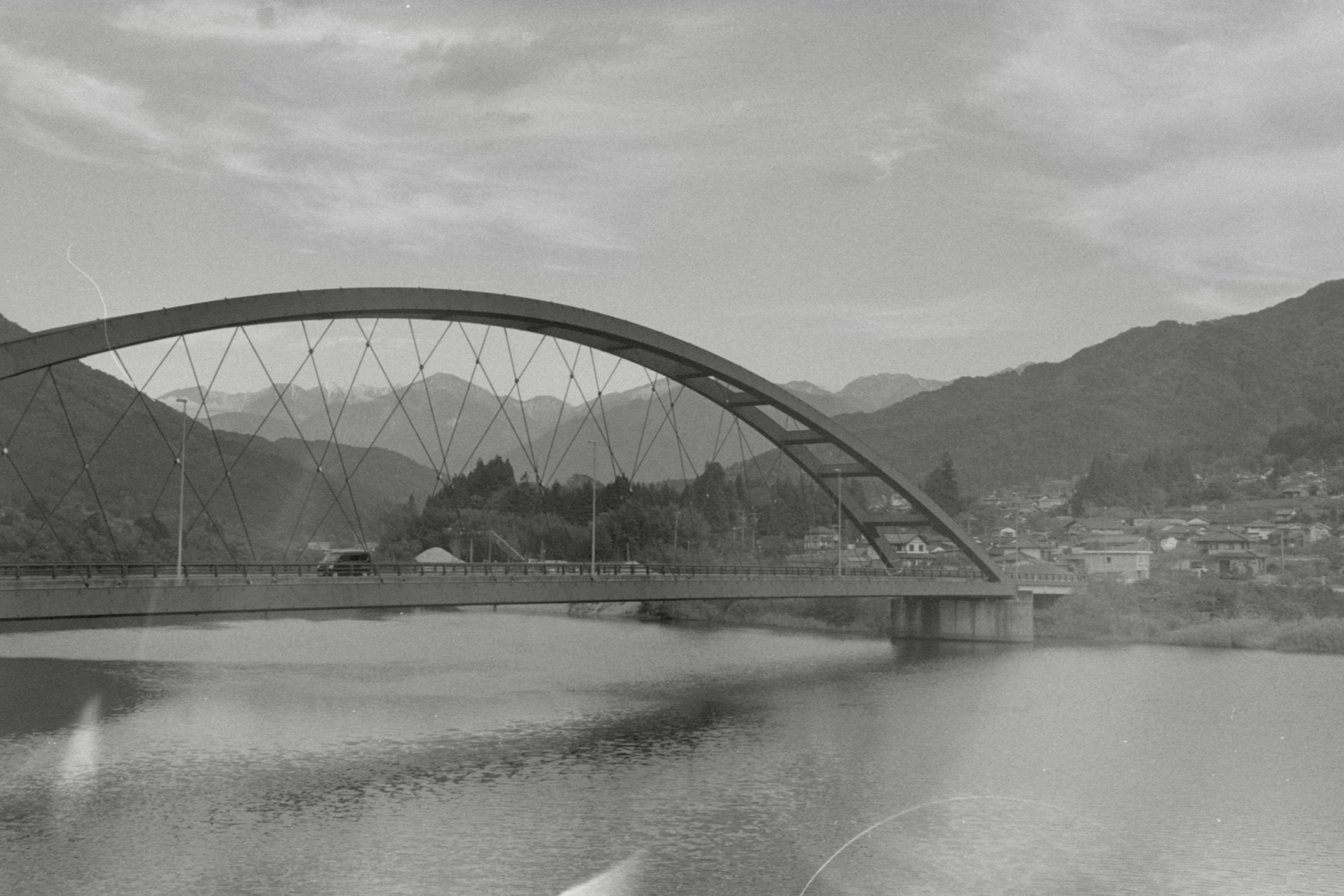
I leave the hotel and head to the train station on the same path I walked in on last night. The river to my side is a deep turquoise and appears motionless, offering perfect reflections of the mountains on the other side of the valley. The sky is uniform grey but trying its hardest to be blue. I have an hour to kill before my train arrives so I decide to find somewhere to sit and paint. I find a vaguely interesting building that is almost monochrome except for a rust-red letterbox and a similar blue box of unknown purpose below it. Over the narrow street from the building is a small green bench. It’s the perfect place to sketch my chosen scene, so I sit down on the bench and start drawing. Within seconds a taxi pulls up right in front of me, blocking my view. It has come to collect the old man who lives in the house I’m sitting outside of. It suddenly occurs to me that I’m not sitting on a public bench at all, but a private bench in what is effectively this old couple’s front garden. The old man says nothing as he struggles into the taxi, but as he drives off his wife pops her head around the door jamb and starts saying something in old-lady-rural Japanese. I tell her I don’t understand and she either repeats herself or says something entirely different. I ask her whether she speaks English and she says yes, then goes on to speak many words of which none are English. She is smiling the whole time and her body language is relaxed so I figure she is just saying go ahead and paint here my dear, it doesn’t bother me. So I do.
The train ride from Nojiri to Nagiso takes nine minutes. It will take me two hours to walk the same distance back. The walk is never further than 50m from the railway line the whole way, and therefore never further than 50m from National Route 19. Indeed, about half of the walk is within 3 metres of N19. I was aware of the necessity to eat pavement for extended stretches of this route when I planned the trip so it doesn’t bother me, and before long I become oblivious to the lorries and cars streaming past, and I’m instead transfixed by the enormity and grace of the valley. Giant off-white boulders fill the riverbed. I consider by which means they arrived there.
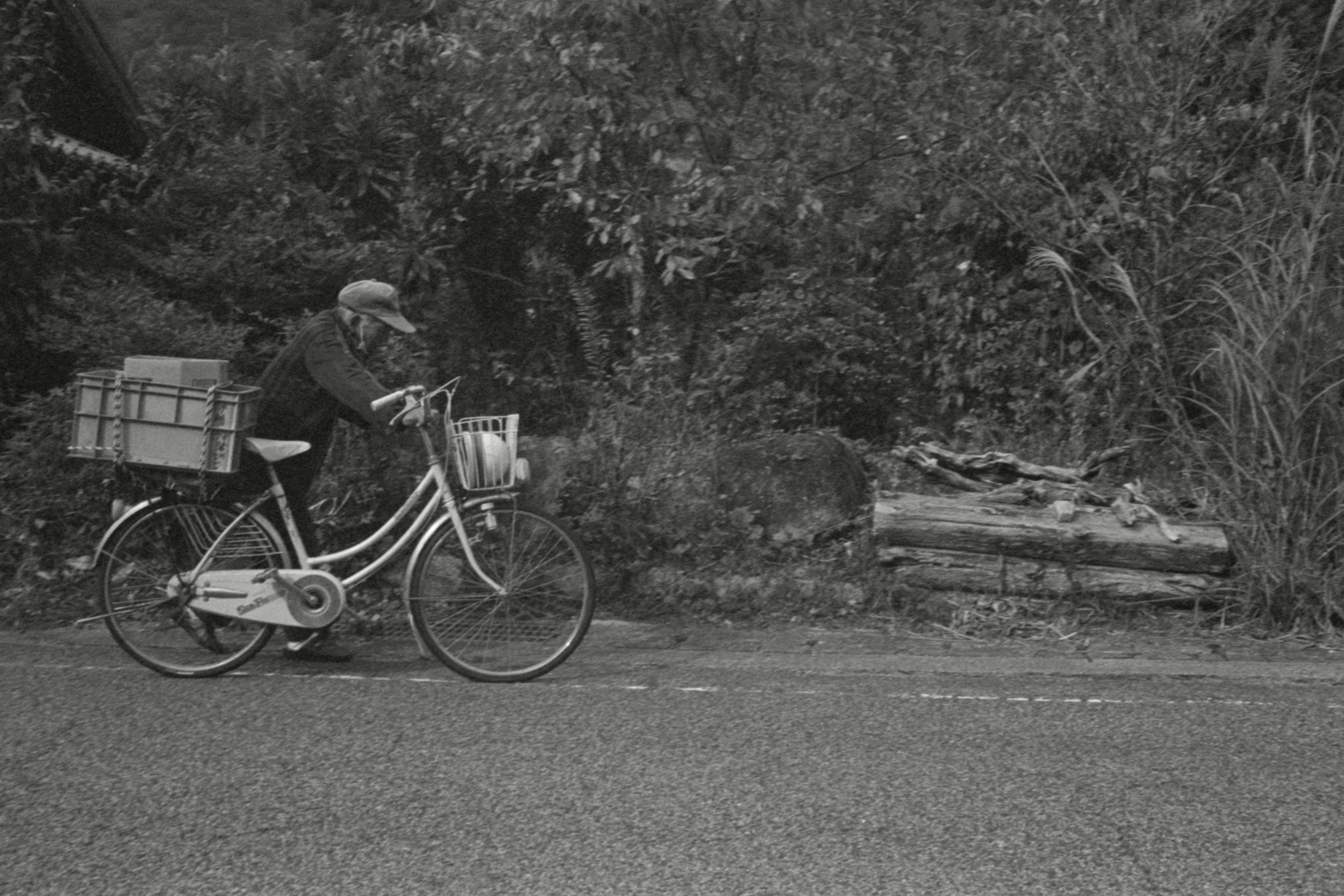
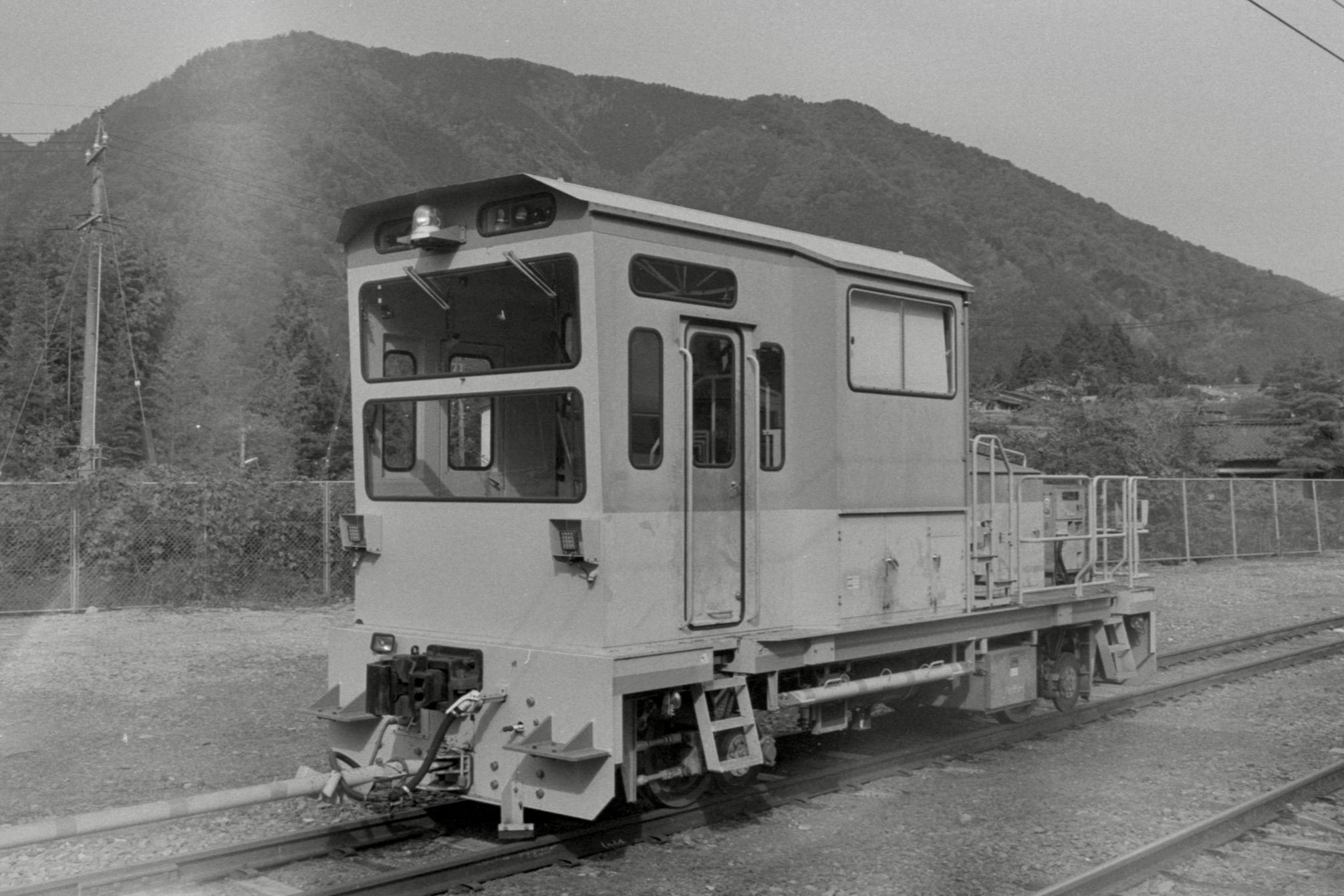
About two kilometres away from Nojiri I eat a banana. Ordinarily I would throw the peel into the bushes or up a tree but this is Japan and I am a guest here so I opt to hold onto it until I find a bin. For a country so clean and tidy there are surprisingly few road- or street-side bins. Like zero. I figure there will be one at the train station at least. Outside the station there are no bins. I go into the waiting room and there are no bins there either. I walk onto the platform and look around and see no bins. I circle back out front and look around. Still no bins. But there are public toilets! There must be a bin in there. In the main toilet area there are no bins. In the corner there is a disabled toilet/baby changing bay, where there must surely be a bin for shit-filled nappies. No bin. I go back inside the station ticket office and ask the clerk where one might find a bin, taking extra care to use the wrong word for bin. I resort to hand signals and he finally gets my drift. He looks around, gives an “ummmm” like he’s working on a solution so hang on in there, and eventually says something along the lines of, “ah, just give it to me.” There is a wall of glass between me and him with only a thin cutout at the bottom for passing coins and tickets back and forth. He sees the predicament too and gestures at the cutout. I slide the soggy banana peel through the cutout and into his hands and say thank you, and he takes the peel and puts it in the only bin in Nojiri. I will be back at Nojiri station tomorrow to recommence my walk, so I hereby open a poll on whether I should hand him another slimy banana peel or not.
The battery on my phone reaches 1% just five minutes from the hotel. If my feet had batteries they would be at 1% too. Across the street I see a sign for a bakery. A crow swoops overhead and caws as I cross the road. Inside the bakery I’m overcome with the smell of cinnamon buns. I order a tea and a pastry and ask the owner whether it’s Bon Iver I hear coming out of the speakers. She shows me her phone and it says it’s Dustin Tebbutt. Gunroku Bakery is beautiful inside. There is space for ten people—two at a low table, four at a regular table, a beautiful green Scandinavian sofa for two and a single chair sitting by itself by the door—but I am the only one here. (I choose the sofa.) Agematsu feels like a town in its death throes—a highway that cuts right through it rather than into it, stores that haven’t changed their façade since the 1970s or earlier, a sense of general decay—but this bakery informs me otherwise. The 30-something proprietors apply their labour and craft to make something that is not aiming to appeal to an aging Japanese population, but to a younger, more international audience. Decorative paraphernalia is sparse but selective: an antique raclette machine; a green enamelware tea kettle; a postcard-sized photo of a chipmunk praying; a chrome analog alarm clock (the kind with bells); two records in protective plastic sleeves; a trailing pothos plant; a wreath of dried autumnal objects; small coloured glass vases; a 12″ figure of Toft from the Moomins; a wooden RCA Victor table radio. A bookshelf is filled with Japanese books that are either ordered alphabetically in Japanese (by author or title) or by spine height, or both. Before I leave I ask the owner what her favourite bird is. Her head tilts upwards as she enters deep thought. At first she says susume, which I seem to think means “recommendation” or “suggestion”, but I wasn’t going to let her off that easily and decide to stare blankly at her instead. She then says tsubame, which previous avian interrogations have taught me means: swallow.
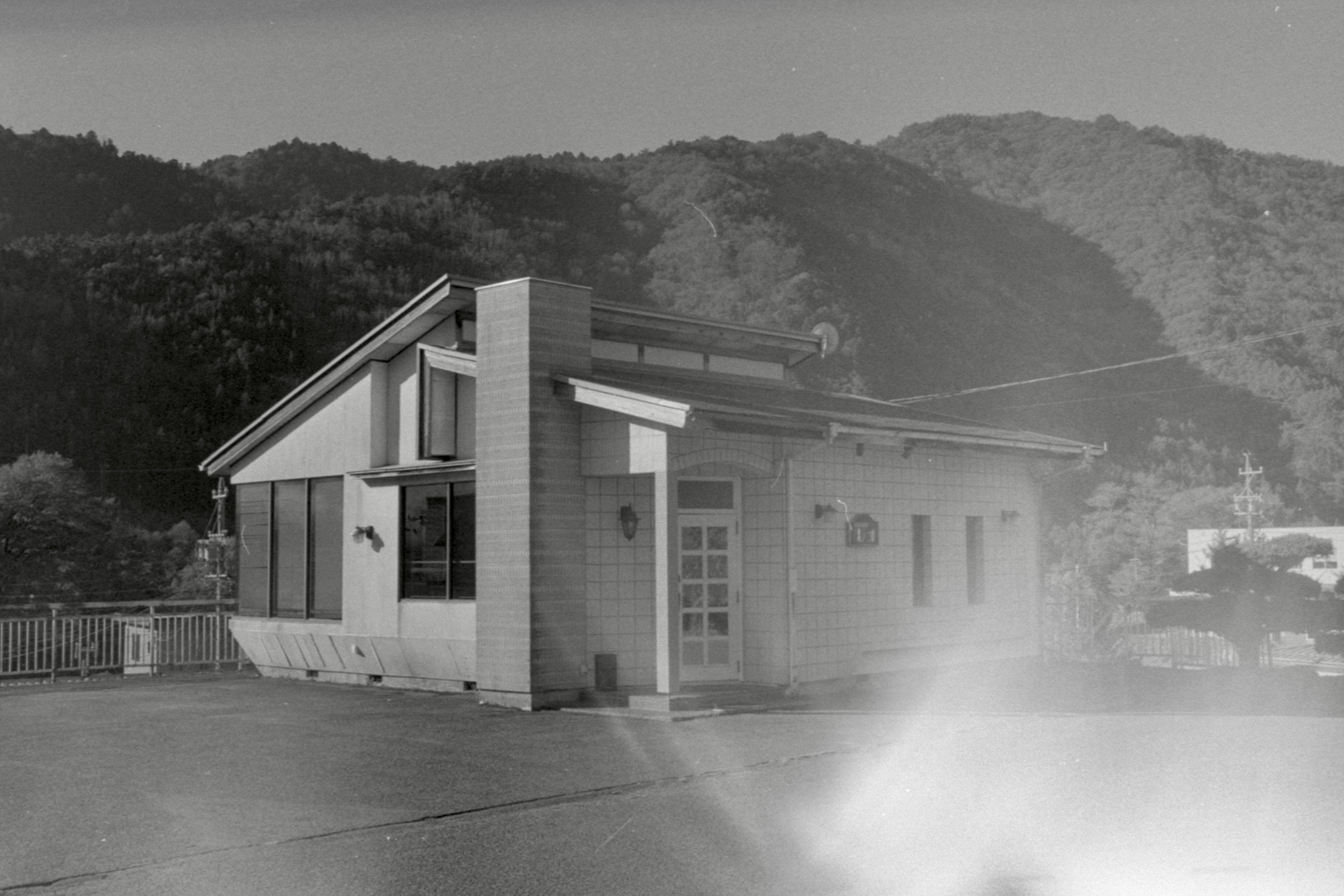
I arrive at the hotel and check in. The receptionist has clearly dealt with foreign guests before, but possibly few who are as prepared/eager to enter into pedantic semantic quibbles at the drop of a hat as I am. She asks me something in Japanese that I—surprise—don’t understand. She pulls out her phone, types the sentence and shows me the English translation: “Do I want to clean my towels?” Since I’m staying for two nights I immediately figure she’s asking me whether I will be needing a new set of towels and a room refresh after the first night, but rather than just say no thank you I choose to ask her to clarify who would be cleaning whose towels exactly. She types the same sentence but in a different way, which ends up as “Do I need fresh towels?” This is still ambiguous because she could still be asking me whether she needs fresh towels, which how am I supposed to know? but I relent and say no thank you and we move on with our lives.
Which for me means trying out mallet golf, a sport I had never heard of until today and now want to play every day for the rest of my life. Think of a cross between mini-golf and croquet: 18 undulating holes, between 30 and 60 metres long, laid out on real grass, with real trees and shrubs as obstacles, but using a croquet mallet and ball. The thwack of mallet on ball is immensely satisfying, as is the unnecessarily loud ring of the ball hitting the base of the metal flagpole. I walk around the course like an excited five year old, smile on my face the whole time, figuring out technique, strategy and rules as I go. I can’t believe my luck that this is the only hotel on this trip I get to stay at for more than one night in a row, which means I get to play again tomorrow.
The day of life-changing events ends with one last cultural novelty as I enter an onsen in full, breezy yukata for the first time.